How to choose your padel racket?
Choosing the right padel racket can make a big difference in your game—whether you’re just starting out or looking to level up your performance. On this page, you’ll find expert advice on the different types of rackets available, from power-focused models to those designed for control or versatility.
We’ll break down the key features to consider—such as shape, weight, balance, and materials—so you can confidently select the racket that best suits your playing style, skill level, and personal preferences.
The main things to consider when choosing a padel racket are:
- Racket Shape – diamond, teardrop/hybrid, round.
- Racket Weight – low (<360g), medium (360-365g) and heavy (365g+)
- Racket Hardness – soft, hard or balanced.
- Racket Materials – carbon / fibreglass / carbonflex / cork etc.
- Racket Balance – low to head heavy
- Your skill level – from beginner to pro
Racket Shape
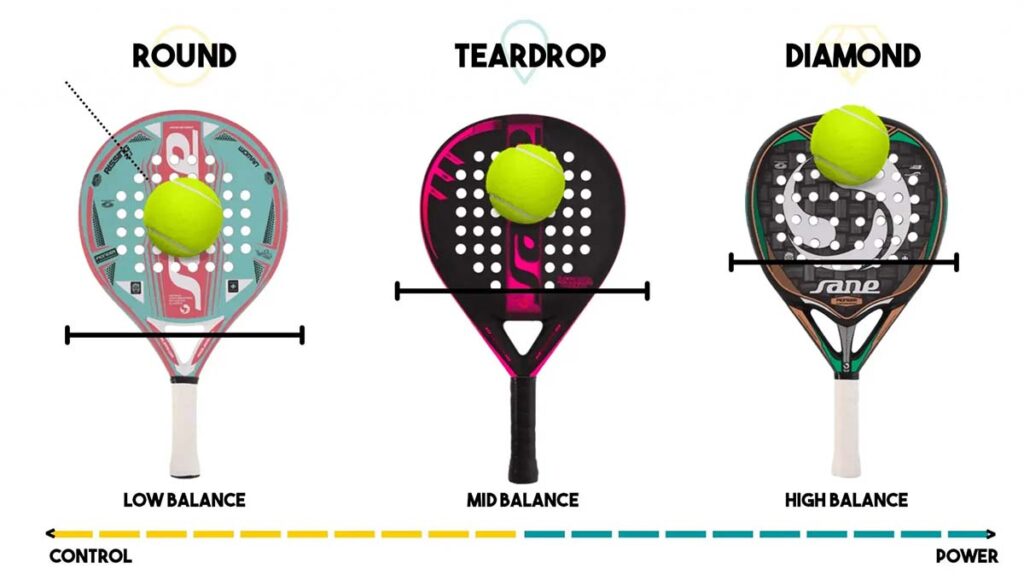
Padel rackets come in three main shapes: round, teardrop, and diamond, each suited to different playing styles.
- Round rackets offer the most control, with a large, centered sweet spot—ideal for beginners or intermediate players who value precision and consistency.
- Teardrop rackets strike a balance between power and control, with a slightly higher sweet spot, making them a solid choice for intermediate or all-round players.
- Diamond-shaped rackets provide maximum power with a smaller, top-positioned sweet spot, favored by advanced players with strong technique who play an aggressive, attacking game.
Racket Weight
Padel rackets come in a range of weights, typically between 340g and 390g, and choosing the right weight can significantly affect your performance and comfort on the court.
Lighter rackets (around 340g–365g) are easier to handle and maneuver, making them ideal for beginners, juniors, or players who prioritize quick reactions and wrist movement—especially at the net. They also put less strain on the arm, which can help prevent injuries like padel elbow.
Heavier rackets (typically 365g–390g) offer more stability and power, especially on volleys and smashes. They’re better suited for experienced players with good technique who can manage the extra weight without sacrificing control. While heavier rackets can deliver stronger shots, they may be harder to maneuver in fast-paced exchanges and can cause fatigue if not well matched to your strength and playing style. Ultimately, the right weight depends on your level, build, and what you want most out of your game—speed, control, or power.
Racket Hardness
Racket hardness – often described as soft face, balanced face, or hard face – has a huge impact on how a padel racket feels at contact and should absolutely factor into your buying decision.
A soft face (usually more fibreglass or lower-density EVA) compresses more on impact, giving you easier power, a cushioned feel, and more comfort on the arm — ideal for beginners, improving intermediates, or anyone managing elbow or shoulder niggles.
A balanced face sits in the middle: it still offers comfort and forgiveness but with a bit more responsiveness and precision, making it a great all-round option for most club players.
A hard face (typically a lower carbon with firmer EVA) feels crisp and direct, with less trampoline effect — you generate your own power, but in return you get more control, sharper volleys, and better performance on fast, aggressive shots.
In short: if you want help from the racket and maximum comfort, go softer; if you create your own power and want a more precise, pro-level feel, go harder — and most players sit happily in the balanced middle.
Racket Materials
Racket materials play a massive role in how a padel racket performs and feels, and they’re a key part of making the right buying decision. The core foam (EVA or similar) largely dictates hardness and comfort — softer foams compress more on impact, giving easier power and a more arm-friendly feel, while denser foams feel firmer, more direct, and offer greater precision for players who generate their own pace.
On the surface, fibreglass is generally more forgiving and elastic, helping with comfort and effortless depth, whereas carbon is stronger, more durable, and typically found in more premium rackets — it delivers a crisper, more responsive feel and better long-term structural stability.
Then you have specialist constructions, such as cork-based rackets, which use cork inserts to dramatically reduce vibration — offering exceptional comfort and shock absorption, particularly for players sensitive to elbow or shoulder issues. In short, materials influence power, control, durability, and arm comfort — so your choice should match both your playing level and how your body feels after a long match.
Racket Balance
Racket balance — whether low (head light), balanced, or head heavy — has a big impact on how a racket moves and performs on court.
A low balance racket carries more weight toward the handle, making it feel quicker in the hand, easier to manoeuvre at the net, and generally more forgiving with a larger, more accessible sweet spot — great for control players, quick reactions, and defensive play.
A balanced racket sits in the middle, offering a mix of stability and manoeuvrability that suits most all-round club players.
A head heavy racket shifts more mass toward the top of the frame, which helps generate extra power on smashes and overheads, but it can feel slower through the air and typically has a slightly smaller, more demanding sweet spot. In simple terms: lower balance gives you speed and forgiveness; higher balance gives you power and punch — and the right choice depends on whether you value quick hands and control or heavier attacking shots.
Your Skill Level
Your skill level should dramatically narrow down your padel racket choices, because the right frame for a beginner can feel completely wrong in the hands of an advanced player. Beginners and early intermediates should usually look toward round or teardrop shapes with a low or balanced balance, as these offer a larger sweet spot, more forgiveness on off-centre hits, and easier control while you’re still developing timing and technique. They help you keep more balls in play and build confidence.
As you move into high intermediate and advanced level, your technique, strength, and consistency allow you to handle more demanding rackets — particularly head heavy, diamond-shaped models. These typically have a smaller sweet spot and require cleaner contact, but in return they deliver greater power and attacking potential, especially on overheads and smashes. In short, the better your fundamentals, the more you can benefit from performance-focused, head-heavy designs — but if you’re still building your game, forgiveness and balance should come first.
We’ve developed a smart padel racket finder to help narrow down the options. We take your skill level, preferences and match it to the padel rackets we’ve played with, know and like and give you personalised recommendations.

Read More
Buying a Padel Racket Guide